



A leaking central heating system can be a nightmare, wasted energy, damaged ceilings, rising bills, and the stress of not knowing where the water’s coming from. At Paul Caton Gas Services, our heating engineers, specialise in tracking down and fixing central heating leaks. With over 25 years of experience, we’ve repaired hundreds of leaks and we know exactly how to locate the problem and get you back to reliable heating.
How Do You Know If You Have a Leak?
Central heating leaks aren’t always obvious. Watch for these warning signs:
- Visible Water Damage Damp patches on ceilings, walls, or floors near radiators, pipework, or your boiler. Even small stains suggest water is escaping somewhere.
- Radiators Losing Pressure If you’re constantly having to bleed air from radiators or if your heating system pressure keeps dropping, there’s almost certainly a leak somewhere in the pipework.
- Increased Energy Bills Your boiler is working harder to maintain pressure in a leaking system, which uses more energy. Unexplained bill increases can signal a slow leak.
- Discoloured Water If you notice rust-coloured water or sludge around a radiator or in your expansion tank, corrosion from a leak is likely the cause.
- Wet Patches in Your Loft Leaks in pipes running through your loft often go unnoticed until they cause damp. Check during a loft inspection.
- Hissing, Gurgling, or Banging Sounds Air entering the system due to a leak causes these noises. Combined with pressure loss, this usually means a leak.
- Boiler Shutting Down Many modern boilers have safety systems that shut down if system pressure drops below a certain point. If this is happening regularly, investigate the cause.
Where Do Central Heating Leaks Occur?
Central heating leaks can happen almost anywhere, but common locations include:
- Radiator Connections Loose or corroded connections at radiator inlets and outlets. These often develop small leaks that gradually worsen.
- Boiler Internal leaks within the boiler itself are less common but serious when they occur.
- Pipework Hidden copper or plastic pipes running through walls, under floors, or in the loft can develop pinhole leaks, especially in older systems.
- Pump Seals The circulation pump can develop leaks at its seals, usually noticeable as water around the pump area.
- Expansion Tank Your expansion vessel (usually in the loft) can develop leaks, particularly if it’s old or hasn’t been serviced recently.
- Joints and Fittings Any joint in the system can eventually leak, especially if solder has deteriorated or if connections have worked loose over time.
Our Central Heating Leak Detection Process
Finding a leak isn’t always straightforward, some are hidden inside walls or beneath floors. That’s why we use a systematic, professional approach.
Step 1: Initial Assessment We listen to your description of the problem, check for visible water damage, and inspect your boiler and radiators.
Step 2: Pressure Testing We monitor your system’s pressure over time. A consistent drop tells us there’s definitely a leak, and helps us estimate its severity.
Step 3: Visual Inspection We carefully inspect all visible pipework, radiator connections, the boiler, and the pump for signs of water escape.
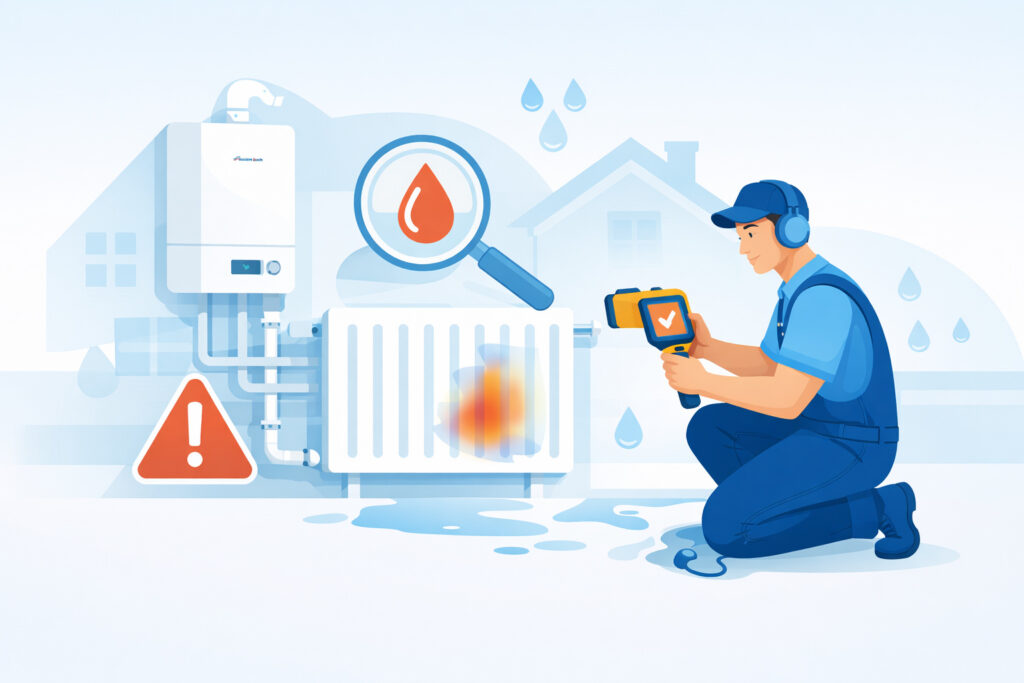
Step 4: Specialist Detection (If Needed) For hidden leaks inside walls or under floors, we use thermal imaging or other specialist techniques to locate the problem without causing unnecessary damage to your home.
Step 5: Diagnosis & Explanation We’ll explain exactly what we’ve found, where the leak is, why it’s happened, and what repair options you have.
Step 6: Professional Repair Once we’ve found the leak, we’ll repair it properly. This might involve tightening a connection, replacing a radiator, renewing pipework, or servicing/replacing the pump.
Step 7: System Flushing (If Needed) If the leak has caused corrosion or sludge buildup, we may recommend a system flush to remove debris and protect your boiler.
Step 8: Pressure Check & Testing After repair, we’ll refill the system, check the pressure, and test everything to ensure the leak is completely resolved.
Common Leak Repairs
- Loose Radiator Connections Often the simplest fix. We tighten the connections using the correct tools and techniques. If corrosion is involved, we may need to replace the fitting.
- Corroded Radiator If a radiator is leaking due to corrosion, replacement is usually the best solution. We’ll fit a new radiator and balance your system.
- Failing Boiler Seal If the boiler itself is leaking, we may be able to replace just the seal, or the boiler might need replacement if it’s old or severely damaged.
- Pinhole Leak in Pipework For small leaks in copper pipe, we can often repair locally using compression fittings. For larger leaks or plastic pipe, we may need to replace a section of pipework.
- Pump Seal Failure We can often replace just the seal, or if the pump is old, suggest replacement with a modern, more efficient model.
- Expansion Vessel Issue If the problem is with your expansion vessel, we can often repair or replace it relatively inexpensively.
Why You Shouldn’t Ignore a Leak
A small leak might seem like a minor issue, but it can cause serious problems:
- Energy Waste Your boiler works harder to maintain pressure, wasting energy and money. A leak can add 10-20% to your heating bills.
- Boiler Damage Constant pressure loss can damage your boiler’s internal components, leading to expensive repairs or premature replacement.
- Water Damage to Your Home Even a slow leak can cause damp, mould, damage to ceilings and walls, and structural issues over time.
- System Breakdown If left untreated, a leak will eventually cause your heating to fail completely, leaving you without heat in winter.
- Corrosion & Sludge A leak allows air into the system, causing rust and corrosion that can block radiators and damage your boiler.
The sooner you address a leak, the less damage it causes and the lower the repair cost.
Cost of Leak Detection and Repair
The cost depends entirely on what’s causing the leak:
- Simple loose connection tightening: £100–£200
- Radiator replacement: £300–£600 per radiator
- Pump seal replacement: £200–£400
- Small pipework repair: £300–£600
- Major pipework replacement: £500–£1,500+
- System flushing (if needed): £300–£600
We’ll provide a detailed quote after our inspection. Many repairs are affordable and can save you far more than their cost in wasted energy and potential damage prevention.
Frequently Asked Questions
How quickly can you attend if I have a leak? We prioritise emergency calls and aim to visit within 24 hours for leak issues. For non-urgent problems, we usually schedule within a few days. Call us on 01246 854 668 for urgent issues.
Do you need to cut into my walls to find a leak? We use non-invasive methods first (visual inspection, thermal imaging, pressure testing). We only make small, careful access holes if absolutely necessary, and these are minimal.
Can a small leak wait until spring? We wouldn’t recommend it. Even small leaks cause ongoing damage, waste energy, and usually worsen over time. It’s better to fix it sooner.
What if the leak is in a hidden pipe? We can often locate hidden leaks using thermal imaging or by monitoring pressure loss. Once located, we can plan the most cost-effective repair.
Will you need to drain my entire system? Usually we can isolate the leaking section and drain just that area. Full system drains aren’t always necessary.
Can you repair old pipework? Yes. We can repair, patch, or replace sections as needed. We’ll advise on the most cost-effective solution.
What’s included in a system flush? We add a chemical cleaner to the system, which circulates and removes corrosion and sludge. This protects your boiler and improves radiator efficiency.
Should I use a sealant additive to fix a leak? We generally don’t recommend sealant additives as a permanent fix. They can cause more problems (blocked radiators, valve failure) and they mask rather than solve the issue. A proper repair is always better.
Is a leak covered by my boiler warranty? Usually not, as leaks are typically caused by wear, age, or external damage. Your warranty covers boiler faults. However, the repair itself is what we’ll help with.
How can I prevent future leaks? Regular servicing, annual boiler checks, and system flushing every 5-7 years all help prevent leaks. We can set up a maintenance plan to keep your system in perfect condition.
Why Trust Paul Caton for Leak Detection?
With over 25 years’ experience, we’ve diagnosed and repaired every type of heating leak imaginable. Our Gas Safe and OFTEC registered engineers are methodical, professional, and genuinely interested in finding the right solution for you, not just the most expensive one.
We use specialist equipment, take time to understand the problem properly, and explain everything clearly so you know exactly what’s happening. Our customers appreciate our thoroughness, friendly service, and honest pricing.
We serve customers throughout Bolsover, Shirebrook, Tibshelf, South Normanton, Clay Cross, Chesterfield, Derbyshire, Nottinghamshire and surrounding areas, from Worksop to Ripley, Mansfield to Newark.
Got a Central Heating Leak? Get Help Today
Don’t let a leak cause more damage. Call us today for a professional assessment and repair quote.
Call 01246 854 668 or 07976 839 052
Or request a callback and we’ll be in touch within 24 hours.
Paul Caton Gas Services – Expert central heating leak detection and repair with over 25 years of experience.