



If you are researching a system boiler installation Chesterfield, you have probably come across a few different boiler types and felt unsure which one actually suits your home. Customers often ask us the same question: What Is A System Boiler And How Does It Work? And more importantly, is it right for my property?
In this guide, we will break it down in plain English. No jargon, no sales pitch. Just an honest explanation to help you make a sensible decision for your home or development.
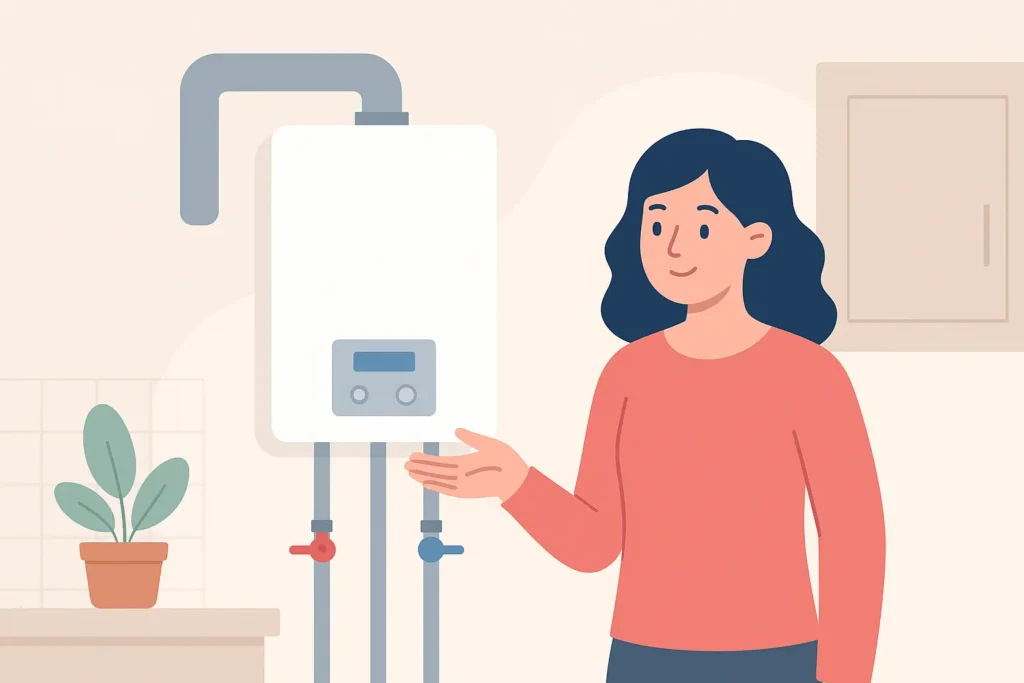
Introduction to System Boilers and How They Differ
In the UK, there are three main types of gas boiler: combi, regular and system. Each one heats your home and water slightly differently.
A combi boiler heats water on demand and does not need a separate hot water cylinder. A regular boiler uses both a cylinder and a cold water storage tank in the loft. A system boiler sits somewhere in between. It uses a hot water cylinder but most of the key components are built into the boiler itself.
For many modern homes around Shirebrook and Skegby, a system boiler offers a good balance between strong water pressure and tidy installation.
What Is a System Boiler? Key Components Explained
So, what exactly is a system boiler?
A system boiler is a sealed heating system that connects directly to the mains water supply and heats your radiators as well as a separate hot water cylinder. Unlike older regular systems, it does not need a cold water tank in the loft.
The main components include:
- The boiler unit itself, usually mounted on a kitchen wall or in a utility room
- A hot water cylinder, often stored in an airing cupboard
- An expansion vessel, usually built into the boiler
- A pump and controls, also typically internal
Because so much is built in, installation tends to be neater and simpler than older vented systems. We often remove bulky loft tanks during upgrades in places like South Normanton, freeing up useful storage space.
How a System Boiler Works Step by Step
It sounds technical, but the process is quite straightforward.
1. Heating the radiators
The boiler burns gas to heat water in a sealed circuit. A built-in pump pushes that hot water through your radiators and back to the boiler to be reheated.
2. Heating your hot water cylinder
At the same time, or when programmed to do so, the boiler heats a coil inside the hot water cylinder. This transfers heat to the stored water, ready for baths, showers and taps.
3. Delivering hot water on demand
When you turn on the hot tap, hot water is drawn from the cylinder rather than being heated instantly like a combi. This means you can run multiple taps at once with good pressure, provided the cylinder is sized correctly.
That is why system boilers are popular in larger family homes with two bathrooms. We often recommend them where a combi would struggle to keep up.
Benefits of System Boilers for UK Homes
There are several reasons homeowners choose a system boiler.
- Great for higher hot water demand – Ideal if you have more than one bathroom
- No loft tank required – Less pipework and lower risk of freezing in winter
- Strong water pressure – Because it runs from the mains supply
- Compatible with solar thermal – Useful for those improving energy efficiency
From experience, they suit semi detached and detached homes particularly well. In some newer estates around Chesterfield and the surrounding villages, they are often the most practical option.
System Boiler vs Combi and Regular Boilers
Choosing between types really depends on your property and usage.
Combi boilers are compact and ideal for flats or smaller homes with one bathroom. If space is tight and hot water demand is modest, a combi can be perfect. You can find out more about options in areas such as Shirebrook, Skegby and South Normanton.
Regular boilers are usually found in older properties with traditional heating systems and loft tanks. They can still work well, but many homeowners upgrade to a system boiler to simplify the setup.
System boilers sit in the middle. They need space for a cylinder, but they offer better performance for busy households.
If you are on oil rather than mains gas, the overall principles are similar. You can explore more about different setups on our oil boilers page.
Is a System Boiler Right for Your Property?
We usually ask customers a few simple questions:
- How many bathrooms do you have?
- Do you often run showers and taps at the same time?
- Do you have space for a hot water cylinder?
- What is your current water pressure like?
For landlords, reliability and ease of servicing are often key. System boilers score well on both counts. For property developers, they offer a modern, tidy solution that appeals to buyers looking for strong water performance.
If you only have one bathroom and limited space, a combi might still be the better route. It is always worth getting tailored advice rather than guessing based on online comparison tables.
Installation Considerations and Costs
Every installation is different. Replacing an old regular boiler with a system boiler can involve removing tanks, altering pipework and possibly upgrading controls.
We also check things like radiator condition, system cleanliness and gas supply size. In older properties especially, a powerflush or magnetic filter may be recommended to protect the new boiler.
Good installation is just as important as the boiler brand itself. Poor pipework or incorrect setup is often what leads to breakdowns down the line rather than the appliance.
Maintenance Tips and When to Upgrade
Once installed, a system boiler should be serviced annually. This keeps it running efficiently and maintains the manufacturer warranty.
We often see systems that have not been serviced for years. Sludge builds up, pressure drops and hot water performance suffers. Regular maintenance is far cheaper than major repairs.
If your boiler is over 12 to 15 years old, makes frequent banging noises or struggles to keep hot water consistent, it may be time to consider upgrading. Modern system boilers are far more efficient than older models and can reduce running costs over time.
Conclusion and Next Steps
So, what is a system boiler and how does it work? In simple terms, it is a sealed boiler that heats your radiators and stores hot water in a cylinder, offering strong performance for homes with higher demand.
If you are unsure which type of boiler suits your home best, getting honest, practical advice makes all the difference. At Paul Caton Gas & Oil Services, we help homeowners, landlords and developers across Chesterfield and surrounding areas choose heating systems that genuinely fit their property and budget.
Get in touch today to arrange your boiler service or request a quote for a new boiler and installation.