



If you live in Chesterfield and your radiators are taking ages to warm up, or you’ve got cold patches that never seem to shift, you’ve probably heard the term powerflushing mentioned. It’s something we get asked about a lot when we’re out on jobs. People aren’t always sure what it involves, or whether it’s really worth doing.
In simple terms, powerflushing is a deep clean for your central heating system. Over time, sludge and debris build up inside your pipes, radiators and boiler. That build-up stops your heating working as efficiently as it should. In this post, I’ll walk you through powerflushing explained Chesterfield style, in plain English, so you know exactly what it does and why it can make such a difference.
What Is Sludge and Why Does It Build Up?
If you’ve ever bled a radiator and seen dark, almost black water, that’s sludge. It’s usually a mix of rust, scale and general debris that forms as water reacts with the metal inside your radiators and pipework.
Most heating systems around Chesterfield use steel radiators. Over time, tiny particles flake off the inside and settle at the bottom. Combine that with limescale and magnetite and you end up with a thick sludge that restricts water flow.
Typical signs of sludge in your system include:
- Cold spots at the bottom of radiators
- Radiators that need frequent bleeding
- Noisy boiler or banging sounds when heating comes on
- Water that looks dirty when drained
- Heating that takes a long time to warm the house
I’ve been in plenty of homes where customers thought they needed a new boiler, but the real issue was heavy sludge build-up. In some cases the boiler is fine, it just can’t push water round properly because the system is partially blocked.
The Powerflush Process
When people hear the term powerflush, they sometimes imagine we blast water through at extreme pressure. It’s not quite like that. It’s controlled and done carefully to avoid damaging the system.
Step One: Connecting the Machine
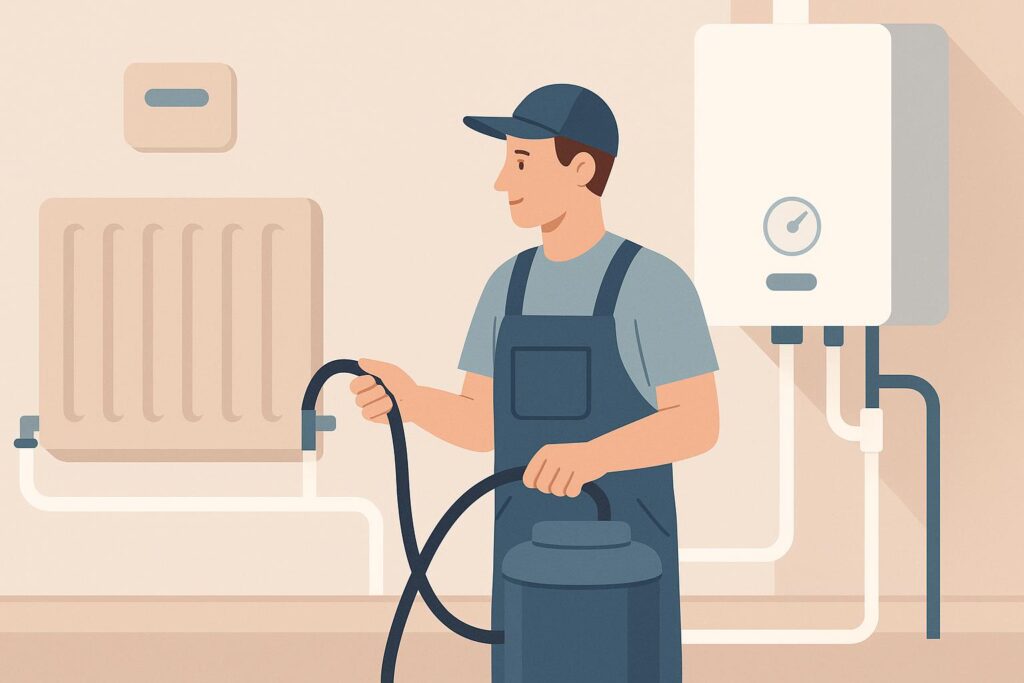
We connect a specialist powerflushing machine to your heating system, usually across the pump or at the boiler. The machine circulates water mixed with cleaning chemicals through the system at high flow, not dangerous pressure.
Step Two: Agitating and Cleaning Each Radiator
Each radiator is flushed individually. We often use magnetic tools to draw out the magnetite sludge. You’d be surprised how much comes out, especially in older properties around areas like Brampton or Hasland where systems may not have been cleaned in years.
We run the machine in different directions to loosen stubborn deposits. The water runs clear once the sludge has been fully removed.
Step Three: Adding Inhibitor
Once everything’s clean, we add a corrosion inhibitor. This is crucial. It helps prevent new sludge forming quickly and keeps your system protected long term.
A proper powerflush usually takes most of a day depending on the size of the house. If someone tells you it’ll be done in an hour, it’s probably not being done properly.
The Benefits of Powerflushing
When customers ask if it’s worth it, I explain what it actually changes in day-to-day life.
First, your heating warms up faster. Once the sludge is gone, hot water can circulate freely. That means radiators get hot across the whole surface, not just the top.
Second, it improves efficiency. When your boiler doesn’t have to work as hard to push water through blockages, it uses less energy. That can help lower running costs, especially during colder Derbyshire winters.
Third, it helps extend the life of your boiler. Modern boilers have narrow heat exchangers which can block easily if the system water is dirty. Cleaning the system protects that investment.
Finally, it can cut down on noise. If your boiler has been kettling or your radiators have been gurgling, sludge is often the culprit.
Powerflushing explained Chesterfield homeowners often comes down to this: if your system is sluggish, noisy or uneven, cleaning it can bring it back to how it should be, without jumping straight to expensive replacements.
If you’re in Chesterfield, Mansfield, Bolsover, Shirebrook, Sutton-in-Ashfield, Warsop, Skegby, Tibshelf, South Normanton, Clay Cross or Worksop and you’re not sure whether your system would benefit, we’re always happy to take a look and give honest advice. At Paul Caton Gas Services, we carry out proper, thorough heating system cleans, not quick fixes. Paul Caton Gas Services has been working on heating systems across the area for years and we know what local properties tend to suffer with.
If your radiators aren’t performing like they should, don’t ignore it until the boiler packs in. Book a Powerflush.