



Is your boiler making strange rumbling, whistling or bubbling noises? These sounds are often an early sign that your system needs professional boiler repairs — and one of the most common causes is a problem known as boiler kettling.
Here’s everything you need to know.
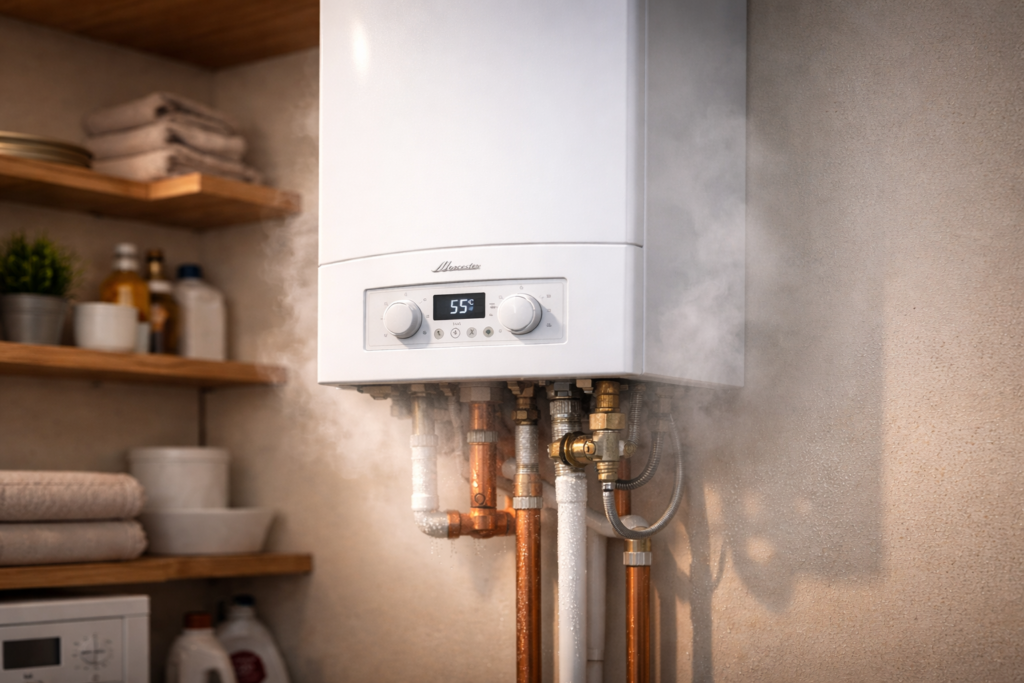
What Is Boiler Kettling?
The name gives it away. Boiler kettling is when your boiler starts making noises eerily similar to a kettle coming to the boil – rumbling, hissing, popping or whistling sounds that shouldn’t be there.
Under normal operation, the water circulating through your heating system should flow smoothly and never actually boil. When something disrupts that flow, water can overheat and begin to turn to steam inside the system – and that’s when the noise starts.
What Causes a Boiler to Kettle?
There are three main culprits:
1. Limescale & Sludge Buildup
This is the most common cause, particularly in hard water areas. Over time, minerals in the water deposit themselves on the heat exchanger and inside pipework, gradually restricting water flow. As the flow slows, water lingers too long near the heat source and begins to boil – producing that telltale kettling noise.
Sludge (a mixture of rust and debris) can cause similar problems, coating the inside of your system and reducing its efficiency.
2. Overheating
If your boiler’s thermostat is faulty or incorrectly set, the system can push water temperatures beyond safe operating levels. Partially blocked pipework can also trap water near the heat exchanger, causing localised overheating even when the thermostat is working fine.
3. A Leak Somewhere in the System
A leak causes a drop in water pressure, which in turn affects flow rate. When flow slows down, the same overheating problem occurs. Leaks aren’t always obvious – they can be hidden within walls, under floors, or at joints anywhere along the pipework.
How Do You Fix a Kettling Boiler?
The fix depends entirely on the root cause.
For limescale or sludge: A heating engineer can carry out either a chemical flush or a power flush. A chemical flush introduces descaling agents into the system to break down deposits, while a power flush uses high-pressure water to physically clear them out. Adding a magnetic filter afterwards can help prevent future buildup.
For overheating: Check your thermostat settings first. If the thermostat appears faulty, it will need repairing or replacing by a qualified engineer. If blocked pipework is to blame, a system flush is usually the recommended course of action here too.
For a leak: This needs a Gas Safe registered engineer – no exceptions. Attempting DIY repairs on a pressurised heating system can be dangerous and may also void your boiler’s warranty. An engineer will pressure-test the system to locate and seal any leaks.
Is Kettling Dangerous?
Kettling itself isn’t an immediate emergency, but ignoring it is a bad idea. Prolonged overheating puts stress on your heat exchanger – one of the most expensive components in a boiler – and can eventually cause internal pipework to fail. Most modern boilers have safety cut-outs that will shut the system down before things get critical, but repeatedly triggering these protections accelerates wear.
The sooner you get it looked at, the cheaper the boiler repair is likely to be.
FAQs
Can I still use my boiler if it’s kettling? In most cases, yes – but you shouldn’t ignore it. If your boiler is cutting out repeatedly or you notice a drop in heating performance, it’s best to stop using it and call an engineer promptly.
How much does it cost to fix a kettling boiler? It varies depending on the cause. A thermostat repair or replacement is usually fairly affordable. A power flush typically costs between £300–£600 depending on the size of your system. If a new heat exchanger is needed due to prolonged damage, costs can be significantly higher.
How do I know if I live in a hard water area? You can check online using your postcode via the local water supplier’s website. A quick visual clue: if you regularly get limescale on your taps and kettle, your boiler is facing the same problem.
Will a water softener help prevent kettling? Yes – installing a water softener or inline scale reducer can significantly reduce the rate of limescale buildup, particularly if you’re in a hard water area. It won’t fix an existing problem, but it can help prevent a repeat one.
How often should I have my boiler serviced to avoid kettling? An annual service by a Gas Safe registered engineer is the best way to catch early signs of limescale, sludge or other issues before they develop into a full kettling problem.
What’s the difference between a power flush and a chemical flush? A power flush uses high-pressure water flow to physically dislodge and remove debris from the system. A chemical flush relies on descaling chemicals to dissolve deposits. Power flushing is generally more thorough; chemical flushing may be sufficient for milder cases or systems that can’t handle the pressure of a power flush.